Quick Access to Your Trucking Insurance Certificate When You Need It Most
Operating a commercial truck without the right documentation can cost you loads—literally. When brokers, shippers, and facilities require proof of insurance before you can haul their freight, having instant access to your Certificate of Insurance (COI) isn’t just convenient—it’s essential for keeping your wheels turning and your business profitable.
What is a Certificate of Insurance (COI) for Commercial Trucks?
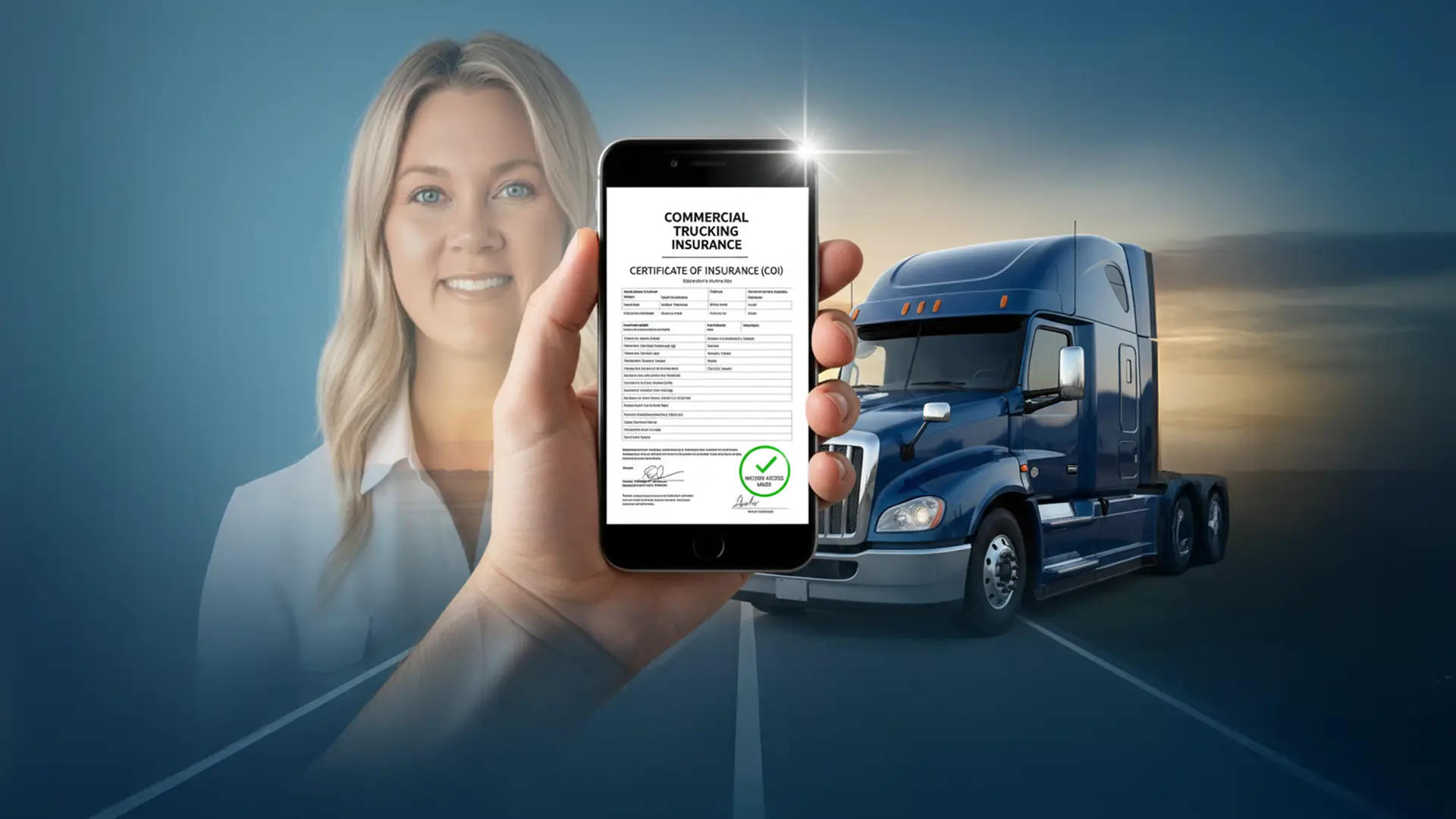
A Certificate of Insurance for commercial trucking is a document that proves you carry active truck insurance coverage. This single-page summary shows brokers, shippers, and facilities that you have the proper commercial truck insurance to haul their freight and access their properties. Sometimes called “ACORD certificates” after the standardized form most insurers use, these documents provide quick verification of your coverage without requiring anyone to review your full insurance policy.
For owner-operators and small fleets, a COI serves as your insurance passport. Without one, even the most lucrative loads remain out of reach. The good news? With Driver Advantage, getting your trucking insurance certificate is simple, fast, and doesn’t require phone calls or waiting periods.
Why Owner-Operators and Trucking Companies Need Certificates of Insurance
In the commercial trucking industry, Certificates of Insurance aren’t optional—they’re a fundamental requirement for doing business. Here’s why you’ll need ready access to your COI:
Freight Brokers Require Proof of Coverage
Load boards and freight brokers won’t let you book a single load without current proof of insurance. Before they tender freight to you, brokers need to verify that you carry adequate liability coverage. Most require a minimum of $1 million in auto liability coverage, and many specialty loads demand even higher limits. Your COI provides instant verification that you meet these requirements.
Shippers and Receivers Demand Documentation
When you arrive at shipping and receiving facilities, many require you to provide proof of insurance before allowing you onto their property. Distribution centers, manufacturing facilities, and warehouses face significant liability exposure from truck traffic. Your Certificate of Insurance reassures them that if an accident occurs on their property, your insurance will respond to claims, protecting them from costly out-of-pocket expenses or litigation.
Contract Requirements With Direct Customers
If you haul directly for shippers rather than through brokers, your contracts will almost certainly require you to maintain specific insurance coverage and provide COIs upon request. Some customers require quarterly or annual updates to confirm your coverage remains active.
Leasing and Terminal Access
Lease agreements with trucking companies, parking at truck terminals, and accessing certain facilities all commonly require proof of insurance. Without a current COI, you may find yourself unable to park your truck overnight or access the facilities you need to operate efficiently.
What Information Does a Trucking Certificate of Insurance Include?
Your commercial truck insurance COI contains all the essential information freight brokers, shippers, and facilities need to verify your coverage:
Policyholder Information: Your name or business name, operating authority (MC number), and contact details appear clearly at the top of the certificate.
Types of Coverage: The document lists each type of coverage you carry, such as auto liability, physical damage, cargo insurance, and general liability. Each coverage type shows the specific limits you maintain.
Policy Limits: Your liability limits are clearly stated, typically showing $1 million in auto liability for most commercial trucking operations. Higher limits appear for specialty operations or when contract requirements demand greater coverage.
Effective Dates: The start and end dates of your policy confirm that your coverage is currently active. Brokers and shippers won’t accept expired certificates, making current dates critical.
Insurance Company Information: Your insurer’s name and contact information allow anyone reviewing the certificate to verify coverage directly with the insurance company if needed.
Certificate Holder Information: When requested for a specific broker or shipper, their information appears in a designated section, showing they’ve been identified as the intended recipient of the certificate.
This straightforward presentation of information helps busy dispatch offices, safety managers, and compliance personnel quickly verify that your insurance meets their requirements without wading through complex insurance terminology or multi-page policy documents.
Types of COIs for Commercial Trucking: Basic vs. Custom Certificates
Commercial truckers typically need two types of Certificates of Insurance, depending on the situation:
Basic Certificates of Insurance
A basic trucking COI simply summarizes your current coverage. You might keep these on hand in your truck to provide to unexpected requests at shipping facilities, or to submit with applications for parking, terminals, or other services. These certificates don’t name any specific party and serve as general proof of your coverage.
Custom Certificates With Additional Insureds
Custom COIs name a specific freight broker, shipper, or facility as an additional insured on your policy. This designation extends certain policy protections to them, providing additional security. Many brokers and large shippers require being named as additional insureds before they’ll work with you.
When a party is listed as an additional insured on your certificate, it indicates they can make claims under your policy in certain situations. For example, if a shipper is sued because of an accident you caused while hauling their freight, your insurance provides coverage for them as an additional insured, protecting them from expensive litigation and settlements.
When Do Commercial Truckers Need a Certificate of Insurance?
Throughout your trucking operations, you’ll encounter numerous situations requiring proof of insurance:
Setting Up With New Brokers: Every freight broker requires a current COI before approving you to haul their loads. Many brokers maintain strict compliance standards and automatically remove carriers whose insurance certificates expire.
Before Every Load With Some Shippers: While some customers accept your annual COI, others require updated certificates for each load, especially when hauling high-value freight or hazardous materials.
Facility Entry Requirements: Distribution centers, ports, manufacturing facilities, and other pickup and delivery locations often require current proof of insurance before granting access to their properties.
Contract Renewals and RFPs: When bidding on dedicated lanes or renewing existing contracts, shippers request updated COIs to confirm continued coverage.
Authority and Compliance Audits: If selected for a DOT audit or insurance review, readily available certificates demonstrate your compliance with insurance requirements.
Leasing Arrangements: When leasing your truck to a carrier or leasing onto someone else’s authority, COIs verify proper coverage for all parties involved.
The common thread? You need your Certificate of Insurance available at a moment’s notice. Delays in providing documentation can cost you loads, damage relationships with brokers, and create bottlenecks that keep your truck parked instead of earning revenue.
Driver Advantage Makes Getting Your Trucking COI Simple
At Driver Advantage, we understand that owner-operators and small fleets need insurance that doesn’t slow them down. That’s why we make accessing your Certificate of Insurance straightforward and immediate.
Instant Access When You Need It
Waiting on hold with insurance companies or submitting requests through email only to wait for responses costs you time and potentially loads. With Driver Advantage, you can access your basic Certificate of Insurance quickly without unnecessary delays or complications.
No Hidden Fees for Certificates
Some insurance providers charge fees for each COI they issue. When you’re working with multiple brokers or submitting certificates to various facilities, these small fees add up quickly. Your insurance should make your operations easier, not more expensive.
Support for Additional Insured Requests
When brokers or shippers require being named as additional insureds on your policy, our team understands the urgency. We work efficiently to process these requests so you can meet broker requirements and book loads without unnecessary holdups.
Professional Documentation That Opens Doors
Your Certificate of Insurance represents your business to brokers, shippers, and facilities. Professional, properly formatted certificates from a recognized insurance provider build confidence in your operation. Driver Advantage provides certificates that meet industry standards and satisfy even the most stringent compliance departments.
COIs: Critical for New Authority Trucking Companies
When you’re just starting out with your new trucking authority, establishing credibility with freight brokers is your first major hurdle. Most owner-operators with new MC numbers discover that brokers scrutinize their insurance documentation carefully. Having immediate access to professional Certificates of Insurance helps demonstrate that despite being new, your operation is legitimate, properly insured, and ready to haul freight professionally.
For new authorities, the ability to quickly provide COIs to multiple brokers as you set up your operation can significantly accelerate your path to that first load. Every day spent waiting for documentation is a day your truck sits idle instead of generating revenue to sustain your new business.
Additional Insured Status: What Truckers Need to Know
The concept of “additional insured” can confuse new owner-operators, but it’s simpler than it sounds. When a freight broker or shipper requests to be named as an additional insured on your policy, they’re asking for their name to appear on your Certificate of Insurance with a notation that they have certain coverage protections under your policy.
This requirement protects them from liability exposure related to your operations. For example, if you cause an accident while hauling a load for Broker ABC, and the injured party sues both you and Broker ABC, your insurance extends coverage to Broker ABC as an additional insured. This arrangement protects the broker from out-of-pocket expenses and legal costs, which is why nearly all brokers require this designation.
For you as the truck operator, adding additional insureds typically doesn’t increase your premium. It’s a standard business practice in trucking that insurance companies expect and accommodate. However, you should verify with your insurance provider how to request additional insured status when needed.
Certificate of Insurance: A Competitive Advantage for Professional Truckers
In an industry where margins are tight and competition is fierce, anything that helps you book more loads and reduce administrative headaches provides a real competitive advantage. Fast access to professional insurance documentation signals to brokers and shippers that you run a tight operation.
Brokers working with hundreds of carriers naturally gravitate toward those who make their jobs easier. When you can immediately provide requested documentation, you stand out from carriers who need days to supply the same information. This reliability can translate into preferred status, better loads, and stronger relationships with the brokers who provide consistent freight.
For small fleets, having streamlined access to multiple COIs for your different trucks and drivers eliminates administrative bottlenecks. You can respond to opportunities quickly, keeping all your trucks loaded and moving.
How Commercial Trucking Insurance Supports Your Business
Beyond the Certificate of Insurance itself, partnering with an insurance provider who understands commercial trucking makes a meaningful difference in your daily operations. Driver Advantage specializes in commercial truck insurance for owner-operators and small fleets throughout the Western United States, with authority services available nationwide.
We know the challenges you face: tight deadlines, demanding brokers, complex regulations, and the constant pressure to keep your truck profitable. Our focus is removing insurance complications from your list of concerns so you can focus on what you do best—safely hauling freight and building your business.
Certificate of Insurance FAQ for Commercial Truckers
How quickly can I get a Certificate of Insurance after purchasing truck insurance? You should have access to your COI immediately or within hours of binding coverage. If you’re starting a new authority or switching insurance providers, plan ahead to ensure you have certificates ready before your current coverage lapses.
Can I get multiple Certificates of Insurance for different brokers? Yes, you can obtain as many COIs as needed for different brokers, shippers, and facilities. Each can be customized to name the appropriate party as the certificate holder or additional insured.
How often should I update my COI with freight brokers? Most brokers require annual updates when your policy renews. Some brokers have systems that automatically flag expiring certificates and request updates. Proactively providing updated COIs before your current certificate expires prevents interruptions in your ability to book loads.
Is a Certificate of Insurance the same as having insurance? No. A COI is simply proof that you have insurance coverage. It’s a summary document, not the insurance policy itself. The actual insurance policy contains the full terms, conditions, and coverage details.
What happens if my COI expires while I’m under load? If your insurance or COI expires while you have active loads, you may face serious consequences including broker violations, contract breaches, and potential liability exposure. Always maintain continuous coverage and ensure your COI reflects current, active insurance.
Do I need different COIs for cargo insurance vs. liability insurance? A single Certificate of Insurance can show both cargo and liability coverage. The certificate lists each coverage type you carry with its respective limits.
Can facilities refuse me entry without a current COI? Yes. Many shipping and receiving facilities have strict policies requiring current proof of insurance before allowing trucks onto their property. This is their right to protect their business from liability exposure.
What’s the minimum liability coverage most brokers require? Most freight brokers require a minimum of $1 million in auto liability coverage even though the federal mandate is $750,000. Some loads, particularly those involving hazardous materials or high-value freight, may require higher limits.
Keep Your Truck Moving With Driver Advantage
Your Certificate of Insurance shouldn’t be a barrier to booking loads or accessing facilities—it should be a simple, readily available tool that keeps your business moving forward. At Driver Advantage, we provide commercial truck insurance solutions designed specifically for owner-operators and small fleets in the Western United States, with trucking authority services available nationwide.
Whether you’re hauling your first load with a new authority or managing a growing fleet, we understand what you need: reliable coverage, professional documentation, and responsive service that doesn’t slow you down. Because in trucking, time is money, and every minute matters.
Ready to simplify your commercial truck insurance and get instant access to the documentation you need? Contact Driver Advantage today to learn how we can support your trucking operation with comprehensive coverage and hassle-free certificate access.
Driver Advantage: Making Commercial Truck Insurance Simple for Owner-Operators and Small Fleets
Driver Advantage provides commercial truck insurance and authority services to owner-operators, new authorities, and small fleets. Licensed to provide commercial truck insurance in Western states and offering nationwide trucking authority filing services, we specialize in making insurance and compliance straightforward for professional truckers.